Other State Initiatives
Illinois’ Technology Immersion Pilot Project
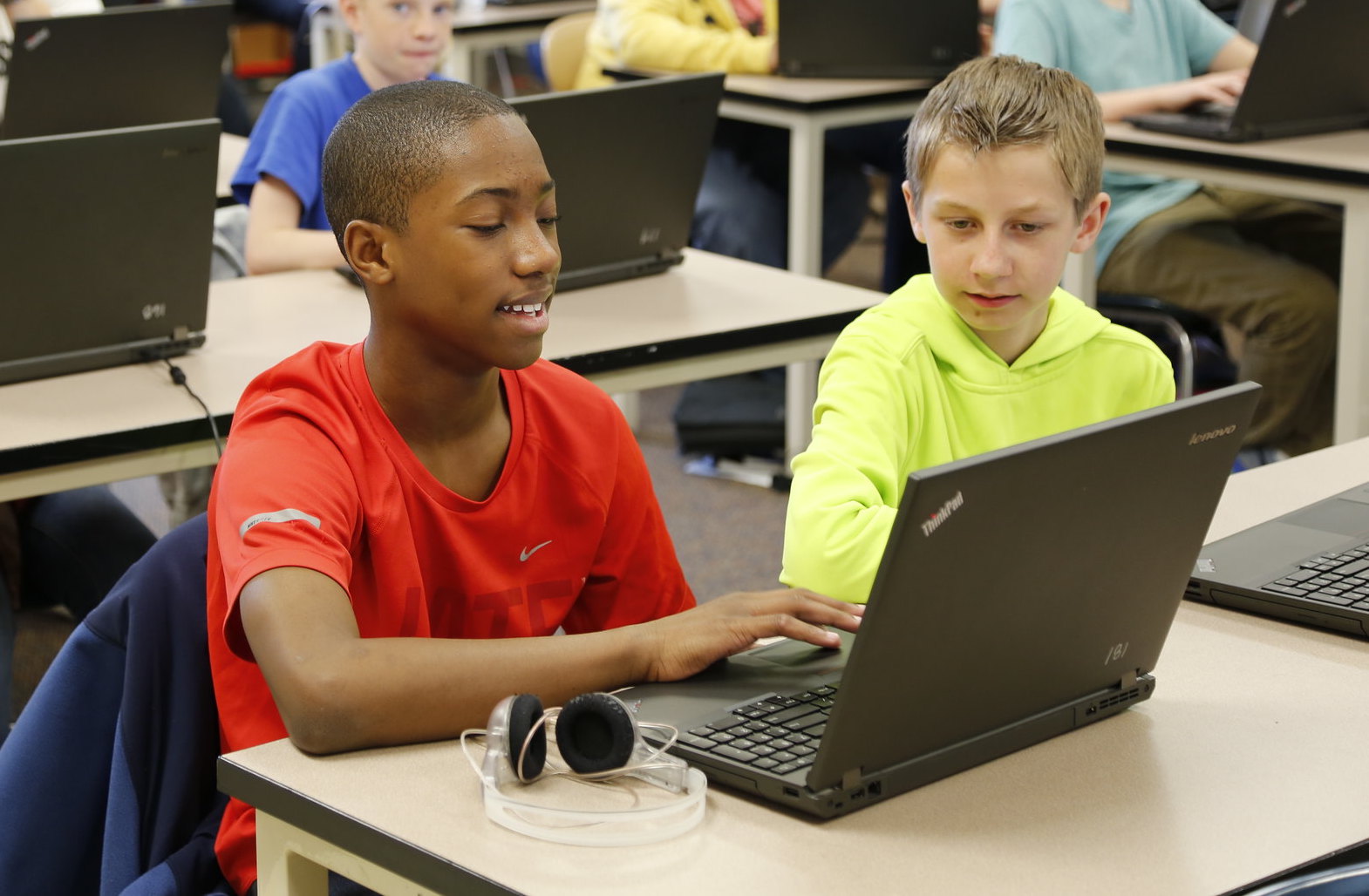
The Illinois Technology Immersion Pilot Project is now in it’s second year. In the first year of the Pilot Project more than 2200 students in seventeen Illinois schools were furnished with laptop or tablet PCs for use in the classroom as well as at home. Additionally, over 300 teachers and administrators received the same equipment to better facilitate the use of technology in the process of teaching and learning. Reports from participating districts relative to Year One of the Pilot Project are currently being reviewed. Early indicators, however, show that the increased access to technology within Pilot Project schools is having a positive impact on participating teachers and students as they embrace a whole new way of learning utilizing leading computer technology.
Maine Learning Technology Initiative
The Maine Learning Technology Initiative is the largest statewide 1:1 computing initiative to date and began in September 2002. The initiative includes laptops for all grade 7 & 8 students and teachers in Maine. Through this initiative, extensive work has been done to develop resources for educators and conduct ongoing evaluation. All of their resources and reports are available at the website link above.
Michigan’s Freedom to Learn Program
Freedom to Learn (FTL) is a statewide initiative aimed at improving student achievement and engagement in our Michigan schools. FTL is the catalyst for changing the way students learn and teachers teach. The demands of a 21st century educational system make this change necessary. FTL empowers teachers to individualize instruction for every child — truly to leave no child behind. FTL creates an environment where every child can have an Individualized Education Plan (IEP), where learning occurs anytime and anywhere, where students are motivated by their own medium of expression. FTL accomplishes this new educational vision through a one-to-one learning environment, in which every student and teacher has access to his or her own wireless laptop in a wireless environment.
New Mexico’s Laptop Learning Initiative
In 2003, Governor Richardson proposed a dramatic initiative on the premise that technology and innovation play key roles in New Mexico’s economic future and in enhancing learning opportunities for students and teachers. One of the strategies proposed by the Governor is not only to prepare youth to be viable contributors to the state’s economy but also to advance the ideals of substantive educational reform through a statewide program that provides seventh grade student and their teachers with laptop computers. The NMLLI is a response to such educational reform.
Pennsylvania’s Classrooms for the Future
Classrooms for the Future are 21st century instructional settings using 21st century techniques to enable 21st century children to succeed. Classrooms for the Future is designed to ensure there are laptops in public high school English, math, science and social studies classrooms across Pennsylvania. A robust companion professional development program guarantees that high school teachers are prepared to integrate these and other technologies into their instructional practices. The site includes guidelines and indicators for developing 21st Century students, teachers, and instructional settings, as well as some recent research and reports on similar programs from other states.
South Dakota’s Classroom Connections Program
The State of South Dakota Classroom Connections initiative is part of Governor Rounds’ 2010 Education Initiative. The 2010 Education Initiative is a series of specific goals and action plans intended to improve the state’s education system by the year 2010. The goal of Governor Rounds’ laptop initiative called Classroom Connections is to provide incentive money for school districts to initiate one-to-one laptop programs for high school students. The site includes information about schools involved, as well as sample documents from pilot schools and links to software and hardware resources.
Texas’ Technology Immersion Project
The Technology Immersion Project (TIP) is centered on a new idea called “Technology immersion.” Technology immersion involves the provision of a combination or “package” of educational hardware, software, electronic curriculum, electronic assessment, professional development and technical support resources to campuses in 23 different school districts around Texas. Immersion is occurring over multiple configurations of campuses: middle schools, secondary schools, a vertical team of campuses, and even a whole district of campuses. The primary goal of TIP is to increase the academic progress of students by immersing campuses in technologies that are directly linked to the enterprise of teaching and learning.
PROJECT TEAM
- Verna Lalbeharie
Project Director - Elizabeth Halstead
Research Associate - Emmy Coleman
Research Associate - Anthony Dove
Graduate Research Assistant - Clara Hess
Graduate Research Assistant - Sherry Booth
Graduate Research Assistant