|
ThinkQuest (Monday 7.13)
ThinkQuest is a learning platform where teachers and students create learning projects, participate in a website competition, and browse a library of student projects. Participants develop 21st century skills such as critical thinking, teamwork, communications, creativity, technology, self direction, and cross cultural understanding.
The ThinkQuest session of the Institute will be organized by Denise Hobbs, who is the Sr. Marketing Manager for the Oracle Education Initiatives. She is responsible for promoting the Oracle Education Foundation Thinkquest, an online project-based learning K-12 platform and the Oracle Academy secondary and postsecondary curriculum for North America.
Apple Remote Desktop (Tuesday 7.14)
Apple Remote Desktop manages the Mac computers on your network. Distribute software, provide real-time online help to end users, create detailed software and hardware reports, and automate routine management tasks — all without leaving your desk.
The Apple Remote Desktop session of the institute is organized by Donald Leu, Ph.D., who is the John and Maria Neag Endowed Chair in Literacy and Technology and holds a joint appointment in Curriculum and Instruction and Educational Psychology at the University of Connecticut. He directs the New Literacies Research Lab at the University of Connecticut and is a member of the Board of Directors of the International Reading Association and the Reading Hall of Fame.
del.icio.us (Tuesday 7.14)
Del.icio.us is a social bookmarking site that allow students to research issues/topics, and share information. Teachers and students can access the bookmarks from any computer, share sites with groups, and organize sites by topic. Also includes RSS feeds so students can sign up to receive information on any topic of interest.
Penzu (Tuesday 7.14)
Penzu can easily be used for class writing projects or students can access the program for keeping their own personal notes (accessible from any computer).Penzu is a free web-based private journal and diary. According to the Penzu, studies have shown that keeping a journal can not only boost your “working memory” but your grades too. One of the best things about Penzu is that it's incredibly easy to use. Whatever you write is saved automatically and you can insert images if you like. Students can keep journal entries private or email them to their teachers. Penzu can easily be used for class writing projects or students can access the program for keeping their own personal notes (accessible from any computer).
Wordle (Tuesday 7.14)
Wordle enables you to create artwork from words, its wondrous properties also allow you to identify key words within a written passage and analyze content. There are unexpected ways to make use of word clouds, classroom teachers already have stepped out in front by identifying all kinds of applications for the classroom that encompass everything from assessment to test review to storytelling.
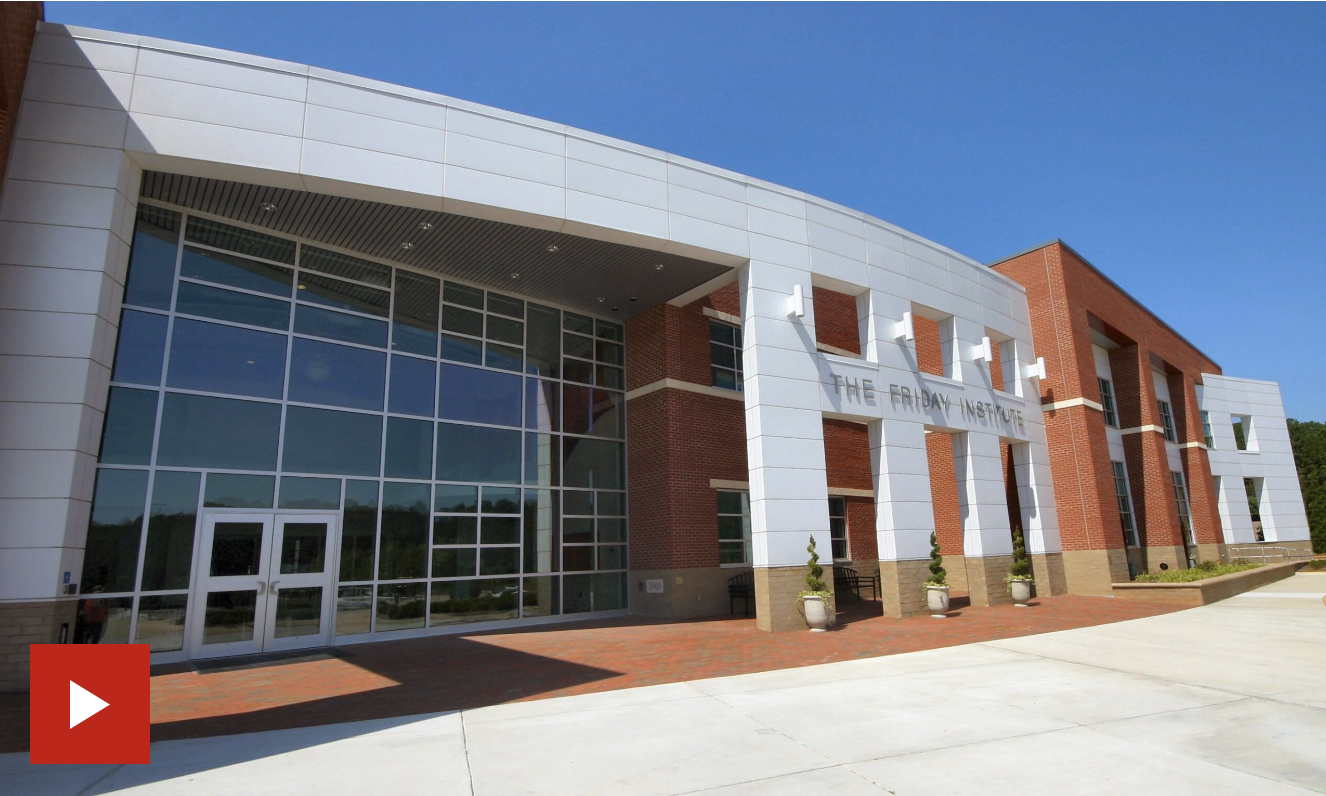
Del.icio.us, penzu, and wordle sessions of the Institute will be organized by Lisa Hervey who is a Ph.D. student in the Department of Curriculum and Instruction at NC State University. She is currently a graduate research assistant at the Friday Institute. Her research interests include K-12 technology integration and developing TPACK for in-service teachers. She holds a National Board for Professional Teaching Standards certification while teaching middle grades language arts for ten years at a public separate school.
Nintendo Wii (Tuesday 7.14)
Wii makes use of a remarkable motion-sensitive controller called the Wii Remote™, which resembles a TV remote control. It's designed to be more inviting and comfortable for non-gamers to use, unlike button-heavy controllers. Learning about and play the Nintendo Wii an interactive gaming system. Consider how it might be utilized for educational purposes.
The Nintendo Wii session of the Institute will be organized by Angela Wiseman, Ph.D., who is an assistant professor of literacy education at NC State University. Her research interests focus on two interrelated strands: 1. Understanding classroom practices that promote an expanded view of learning by bridging the gap between in and out of school literacies and focusing on student strengths and 2. Supporting inservice and preservice teachers’ understanding of diversity in the classroom.
PrimaryAccess (Tuesday 7.14)
Primary Access is a free, web-based application that provides a highly scaffolded environment for student creation of digital documentaries. In this session we will learn more about this application and related tools, including PrimaryAccess StoryBoard and HistoryBrowser. Using sample social studies units, we will explore the various aspects of documentary creation, including script writing and narration, and ways to support literacy development in the Information Age.
Meghan McGlinn Manfra, PhD is an assistant professor and the coordinator of secondary social studies at North Carolina State University. Her research focuses on the integration of technology and digital history in the social studies classroom.
Quest Atlantis (Tuesday 7.14)
Quest Atlantis (QA) is an international learning and teaching project that uses a 3D multi-user environment to immerse children, ages 9-15, in educational tasks. QA combines strategies used in the commercial gaming environment with lessons from educational research on learning and motivation.
The Quest Atlantis session will be organized by Randall Miller. Randal is an Instructional Technology Facilitator at A.B. Combs Leadership Magnet Elementary School. She has her undergraduate degree from UNC-G in Deaf Education and her Master’s from NCSU in Instructional Technology.
Second Life (Tuesday 7.14)
Second Life is a free 3D virtual world imagined and created by its Residents. To get started, you will need to download the Second Life viewer. Once installed, you will be able to walk, "teleport" or even fly to thousands of exciting 3D locations. You can also use voice and text chat to communicate with other real people from around the world. Educators are beginning to explore the use of Second Life for professional development, including PLCs (professional learning communities).
The Second Life session will be organized by Dr. Cris Crissman. She is an instructional designer and content developer for L2L's Reading, Writing, and Thinking Across the Curriculum (http://www.usdlc-l2l.org/). She is also a Special Projects Consultant with Distance Learning at the North Carolina Department of Public Instruction, an Adjunct Assistant Professor in the Curriculum and Instruction Department at NCSU, and a writer and media producer.
VoiceThread (Tuesday 7.14)
VoiceThread is a collaborative, multimedia slide show that holds images, documents, and videos and allows people to navigate pages and leave comments in 5 ways - using voice (with a mic or telephone), text, audio file, or video (via a webcam). Share a VoiceThread with friends, students, and colleagues for them to record comments too. With VoiceThread, group conversations are collected and shared in one place from anywhere in the world. All with no software to install.
The Voicethread session will be organized by Bethany Smith, who is the Assistant Director of Learning Technologies at NC State University College of Education. Bethany received her master’s from NC State in Instructional Technologies. Her research interests include the use of online educational social networking in school environments. Bethany was the recipient of the 2008 College of Education Award for Excellence.
ACRE Project: Assessment Pilot Using Moodle (Wednesday 7.15)
The Accountability and Curriculum Reform Effort or ACRE focuses on accountability and Curriculum Reform in NC. It addresses the following key elements: 1) define essential standards, 2) improve assessments of achievement for informing instruction, and 3) build a new accountability system.
The ACRE session will be organized by Dr. Cindy Williamson, the Curriculum, Instruction & Technology Director for the NC Department of Public Instruction. She holds a Ph.D in Educational Leadership. She was a teacher in the NC public school system for 18 years and taught at the elementary, middle and high school levels. She has served as Director of Curriculum & Accountability and as Associate Superintendent of Instruction and Accountability.
Fizz (Wednesday 7.15)
Fizz allows teachers to implement safe Web 2.0 environments in the classroom, giving them a private YouTube-like site for each school. Through the FIZZ Web site, teaching and learning outcomes can be easily broadcast over the Internet to increase student engagement and achievement, while still allowing school administrators to control the Web site's content.
The Fizz session of the Institute will be organized by Lodge McCammon, Ph.D., who is a specialist of curriculum and contemporary media at NC State's Friday Institute. Lodge recieved his Ph.D. from North Carolina State University in Curriculum and Instruction.
Digital Video as Process and Product (Wednesday 7.15)
Students' use and creation of classroom-based digital videos provide numerous opportunities to enhance and extend, draw parallels among various forms of text in the 21st century. In this session participants will explore how digital video, similar to writing, can serve as both process and product.
The Digital Video session will be organized and guided by Dr. Carol Pope, Professor of English language arts in the College of Education, NC State University. Carol teaches courses in young adult literature and teaching composition, both of which include extensive partnerships with middle school students and teachers. This partnership forms the basis for her collaborative work on digital video, text, and teacher development.
Notefish (Wednesday 7.15)
NoteFish makes internet research simple. It is an online collaborative tool that enables note taking, and sharing. Notefish is the easiest way to save, organize and share snippets of internet web pages that you find. Users can save their notes to a personalized page and share these with other NoteFish users.
The NoteFish session of the institute is organized by Julie Coiro, Ph.D. and Jill Castek, Ph.D. Julie is an Assistant Professor in the School of Education at the University of Rhode Island. Among her research interests are strategic reading comprehension instruction, new literacies of the Internet, online reading comprehension, and effective practices for technology integration and professional development.
Jill Castek, Ph.D. is a trained reading specialist and curriculum leader with a decade of experience working with students in grades K-12. Jill earned her Ph.D in 2008 at the University of Connecticut in the area of Cognition and Instruction. She currently holds a post-doc position with the Seeds of Science/Roots of Reading project at the Lawrence Hall of Science, University of California, Berkeley.
SAS Curriculum Pathways (Wednesday 7.15)
SAS Curriculum Pathways provides interactive, standards-based resources in English, science, mathematics, social studies and Spanish for grades 8-12. SAS focuses on topics where doing, seeing and listening provide information and encourage insights in ways that conventional methods cannot. Fully funded by SAS, these resources are available at no cost to traditional, virtual, and home-school educators and their students.
The SAS Curiculum Pathways session of the institute is organized by Terry Hardison and Sara Hinsley. Terry Hardison is an English curriculum specialist for SAS® Curriculum Pathways®. Prior to joining SAS in 2000, Terry worked for the Wake County Public School System for 22 years—first as a high school English teacher, and then as supervisor of middle and high school English.
Sara Hinsley, mathematics curriculum specialist with SAS® Curriculum Pathways®, taught high school math, ranging from algebra through calculus, for six years, in addition to serving as department chair. She holds an M.A.T from the University of North Carolina at Chapel Hill and a bachelor’s degree in mathematics from Point Loma Nazarene University (San Diego, CA).
Trailfire (Wednesday 7.15)
Trailfire rewires the web to your interests. It guides you as you browse, suggesting where you can find information related to any page you're on at anytime. It also lets you make your own connections on the web - to link pages that relate to a topic from your own point of view. By empowering individuals to distill the web, drawing on their knowledge and adding their opinions, Trailfire creates a web of meaning.
The Trailfire session of the institute is organized by Kevin Oliver, Ph.D. Currently, Kevin is an Assistant Professor of Instructional Technology at North Carolina State University. His primary research interests center on the application of Web-based tools, particularly those used in distance education, in support of student-centered teaching and learning. His secondary research strand relates to the evaluation of programs with intensive technology integrations such as schoolwide 1:1 computing, and statewide virtual schooling.
|